The Housing Tahoe Needs
The Tahoe region is facing a housing affordability crisis, and the Tahoe Regional Planning Agency is updating its housing policies to address it. Tahoe's land use rules must protect Lake Tahoe's clarity by law. Any changes to housing development must balance community needs with lake protection.
We believe TRPA must adopt focused policies that prioritize safe, affordable, environmentally sound housing. Will you join us?
Our Goal: Workforce Housing That Protects The Lake
TRPA is starting its environmental review process for planned updates to housing development rules and other housing policies. These changes are intended to expand access to housing for Tahoe’s workforce as well as other low-income residents, seniors, and people with disabilities. These changes will build on and expand policy updates made during the recent Phase 2 Housing Amendment process. We expect these new rules to be adopted by the end of 2026.
In 2012, TRPA conducted an environmental analysis that set a cap on the number of housing units that could be built within the Tahoe Basin without compromising lake clarity. Any housing development incentives TRPA adopts must prioritize workforce housing, not more luxury development.
TRPA staff have presented some ideas that would make it easier to build any housing and in ways that could decrease lake clarity. Our communities need housing abundance for workers, not more housing for second-home buyers. That requires smart policy, not just more construction.
Not Just More Housing: Workforce Housing
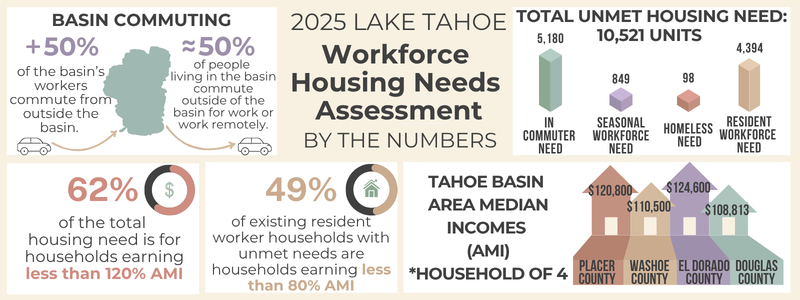
A survey released by TRPA in December 2025 revealed a concerning trend: two-thirds of Tahoe Basin residents struggle to afford housing. Clearly, we need better policies to ensure the housing units we have are being used by the people who live and work here, not just by visitors.
TRPA’s new housing plan must prioritize workforce housing. If it includes the same incentives for "achievable," or market-rate housing – an option currently under consideration – we will end up with more luxury development and more empty second homes. That won’t solve the housing crisis facing local workers.
Today, thousands of units in Tahoe – houses, condos, and even backyard tiny homes – are rented out as vacation properties instead of the homes our workforce needs. TRPA has the power to set policies to reverse this trend.
Protecting Lake Clarity in Non Negotiable
TRPA's charter is to protect Lake Tahoe's water quality. The lake drives our economy and defines our community—protecting it is non-negotiable.
Policy changes that allow developers to pave over most of a property will increase the amount of runoff that flows into Lake Tahoe unless strict water treatment standards are kept in place. Unfortunately, TRPA is considering loosening water treatment requirements to help housing developers cut costs – not just for deed-restricted, low-income housing, but for most new housing units in the region. These kinds of changes will only make it harder to protect the lake from pollution.
Keeping Communities Safe from Wildfire
As we’ve seen in tragedies like the 2018 Camp Fire, which tore through Paradise, California, the ability to evacuate safely and quickly can be a matter of life or death. In a tourism-heavy region like Tahoe, which sees heavy traffic year-round, good planning can make all the difference in keeping our communities safe. A 2025 article in CalMatters paints a dire picture for public safety if a catastrophic wildfire hits the region.
TRPA’s updated housing plans allow increased density in both town centers and beyond. TRPA must study how changes that would make it easier to build higher and increase housing density will affect our ability to safely escape a wildfire and place limits where safe evacuation would not be possible.
Join Us! Urge TRPA to Plan for the Housing Tahoe Needs
If you agree that TRPA must prioritize policies and incentives to promote workforce housing built in ways that protect water quality in Lake Tahoe, add your voice! Use the form below to tell your story about how a lack of affordable housing affects your family, your community, and your quality of life. You may sign on to the letter below or make edits to share your own questions and concerns.